

To make ravioli at home, prepare a rested pasta dough, roll it into thin sheets, use a filling that is firm rather than wet, press out trapped air, seal the edges well and cook the ravioli briefly in salted water. The difference between ravioli that hold and ravioli that open is usually not one secret ingredient. It is control: dough thickness, filling moisture, spacing, pressure and a clean cut.
What is the best way to make ravioli at home?
The best way to make ravioli at home is to treat the process as a sequence of small, controlled gestures. First, make a dough that can be rolled thin without tearing. Then prepare a filling that keeps its shape on the pasta sheet. Finally, close each raviolo with enough pressure to remove air and seal the two layers of dough together.
Most beginner mistakes happen because one step is rushed. If the dough has not rested, it springs back while rolling. If the filling is too loose, it seeps toward the border. If air remains around the filling, the ravioli can swell in the pot and open. If the cut is uneven, the edge can look rough and seal less cleanly.
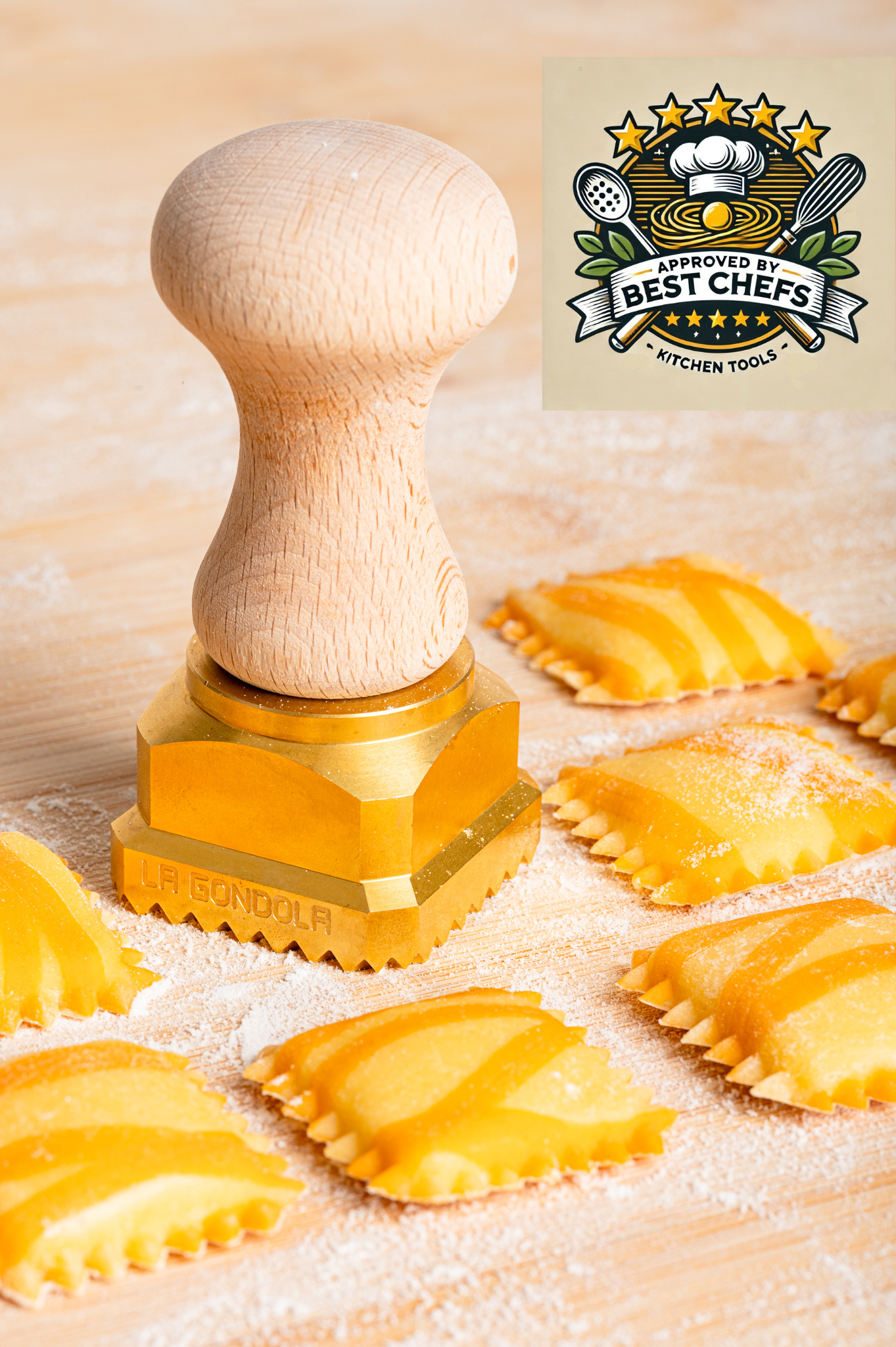
This is where the tool matters. A knife can divide pasta, but it does not help much with repeatable pressure. A professional ravioli stamp gives you a defined shape, a consistent border and a more stable movement. LaGondola handmade ravioli stamps are made for this exact gesture: press, cut, seal and repeat with better control.
How to make pasta dough for ravioli
A good ravioli dough should be elastic, smooth and dry enough to handle without sticking. A classic egg dough works well for most home kitchens: flour, eggs and a little patience. Mix until the dough comes together, knead until the surface becomes smoother, then cover it and let it rest. Resting is not decorative. It allows the dough to relax so it rolls more evenly.
For ravioli, the pasta sheet should be thin but not fragile. If it is too thick, the finished ravioli can feel heavy and chewy. If it is too thin, the filling may push through the dough or tear the sheet while sealing. Aim for a sheet that is flexible, lightly translucent and still strong enough to lift.
Work with one piece of dough at a time and keep the rest covered. Flour the board lightly, but do not bury the dough in flour. Too much dry flour between the two sheets can make sealing harder. The surface should feel manageable, not dusty.
How to prepare a filling that does not leak
The filling must taste good, but for ravioli it also has a structural job. It needs to stay in place while you close and cut the pasta. A filling that is too wet will travel toward the border, weaken the seal and make the ravioli harder to move.
If you use ricotta, drain it well before mixing. Add cheese, herbs or vegetables only after removing excess moisture. Cooked greens should be squeezed carefully. Roasted pumpkin or mushrooms should be cooled before filling the pasta. Meat fillings should be finely chopped or ground so they sit evenly under the sheet.
The right texture is soft but not runny. When placed on the pasta, each portion should hold a mound. Leave enough space around every mound of filling. The border is not wasted pasta; it is the part that closes the raviolo. For square ravioli, regular spacing also makes the final sheet easier to stamp cleanly.
How to shape and seal ravioli with clean edges
Lay one pasta sheet on the board and place small portions of filling at regular intervals. Cover with a second sheet, or fold the same sheet over if you are working in a smaller setup. Start pressing close to the filling, not at the outer edge. Move around each mound with your fingertips to push trapped air away before sealing the border.
Once the air is out and the dough layers touch cleanly, press the border. This is the moment where a ravioli stamp becomes useful. A steady stamp can cut the shape and compress the edge in one controlled movement. The result is not only a neater look. It can also help the ravioli stay closed during cooking because the edge has been pressed with more consistency.
Do not rush the stamping motion. Place the stamp straight over the filling, check that the border has enough space, then press firmly and evenly. Lift cleanly. If the dough sticks, dust the stamp very lightly before the next piece.
Why a brass ravioli stamp changes the sealing gesture
A brass ravioli stamp is not just a decorative object. The weight of the brass head gives the hand a steadier movement, while the natural wood handle keeps the grip comfortable during repeated use. That combination matters when you are making a full batch, not only one or two pieces.
The LaGondola 45x45 brass ravioli stamp is designed for square ravioli and tortelli. The product page confirms a brass head, natural wood handle, expeller and a 4.5 cm width with 10 cm height. Used on properly rolled dough, it helps produce a defined square format with crisp edges and a repeatable border.
The tool does not replace good dough or a balanced filling. It supports them. If the filling is watery, no stamp can fix the problem. If the sheet is too thick, the seal will be heavy. But when the fundamentals are right, a well-made stamp gives the final gesture more precision.
How long to cook fresh ravioli
Fresh ravioli cook quickly. Use a wide pot with salted water and keep the boil controlled rather than violent. Add the ravioli in batches so they have room to move. Depending on thickness and filling, many fresh ravioli cook in about three to five minutes.
Do not judge only by the clock. Taste one piece. The pasta should be tender but still have structure. Remove the ravioli gently with a slotted spoon instead of draining them aggressively into a colander. Filled pasta is more delicate than long pasta, especially when just made.
Simple sauces work well because they do not fight the filling. Butter and sage, light tomato sauce or a little olive oil and grated cheese can be enough. The cleaner the ravioli edge, the easier it is for the finished plate to feel deliberate rather than improvised.
Common mistakes when making ravioli at home
The most common mistake is using a filling that is too wet. The second is trapping air under the top sheet. The third is cutting too close to the filling, leaving no real border to seal.
Another frequent issue is over-flouring. Flour helps prevent sticking, but if it sits between the two pasta layers, the dough may not close well. Use flour on the board, not as a blanket between the sheets.
Finally, avoid changing too many things at once. Start with a simple ricotta-based or vegetable filling, one regular shape and a manageable sheet length. Once the gesture feels natural, you can move toward larger formats, different fillings or more ambitious shapes.
Key takeaways for better homemade ravioli
Good ravioli come from control. Rest the dough. Roll the sheet thin but not fragile. Keep the filling firm. Leave space around each portion. Press out air before sealing. Cut with a tool that gives you a clean, repeatable border.
For cooks who make filled pasta more than once in a while, a handmade brass and wood stamp is not a showpiece. It is a working tool. It helps make the final movement steadier and gives the ravioli the kind of clean edge that looks right on the board and behaves better in the pot. To choose the shape that fits your kitchen, explore LaGondola's brass and natural wood ravioli stamp collection.
FAQ about how to make ravioli
How thin should pasta be for ravioli?
The sheet should be thin enough to feel delicate after cooking, but strong enough to hold the filling without tearing. A lightly translucent sheet is usually a good sign. If the dough feels thick when two layers overlap, the ravioli may cook unevenly. If it tears while you press the filling, it is too thin or too dry. Roll gradually and keep unused dough covered.
Why do homemade ravioli open while cooking?
Ravioli usually open because the filling is too wet, air was trapped around the filling, the border was too narrow or the edge was not pressed firmly enough. A controlled sealing gesture matters. Press close to the filling first, move the air outward and then cut with enough border. A well-made ravioli stamp can help because it compresses and defines the edge in a repeatable way.
Can I make ravioli without a ravioli stamp?
Yes, but it takes more attention to spacing, pressure and cutting. A knife or wheel can divide the pasta, yet the edge may vary from piece to piece unless your hand is very steady. A ravioli stamp is useful when you want cleaner borders, more consistent shapes and a sealing movement that is easier to repeat across a batch.
Should ravioli be cooked fresh or frozen?
Fresh ravioli are excellent when cooked soon after shaping. If you are not cooking them within a short time, freeze them on a floured tray in a single layer before storing. This helps protect the shape and reduces sticking. Do not leave filled pasta sitting too long at room temperature, especially with moist fillings.