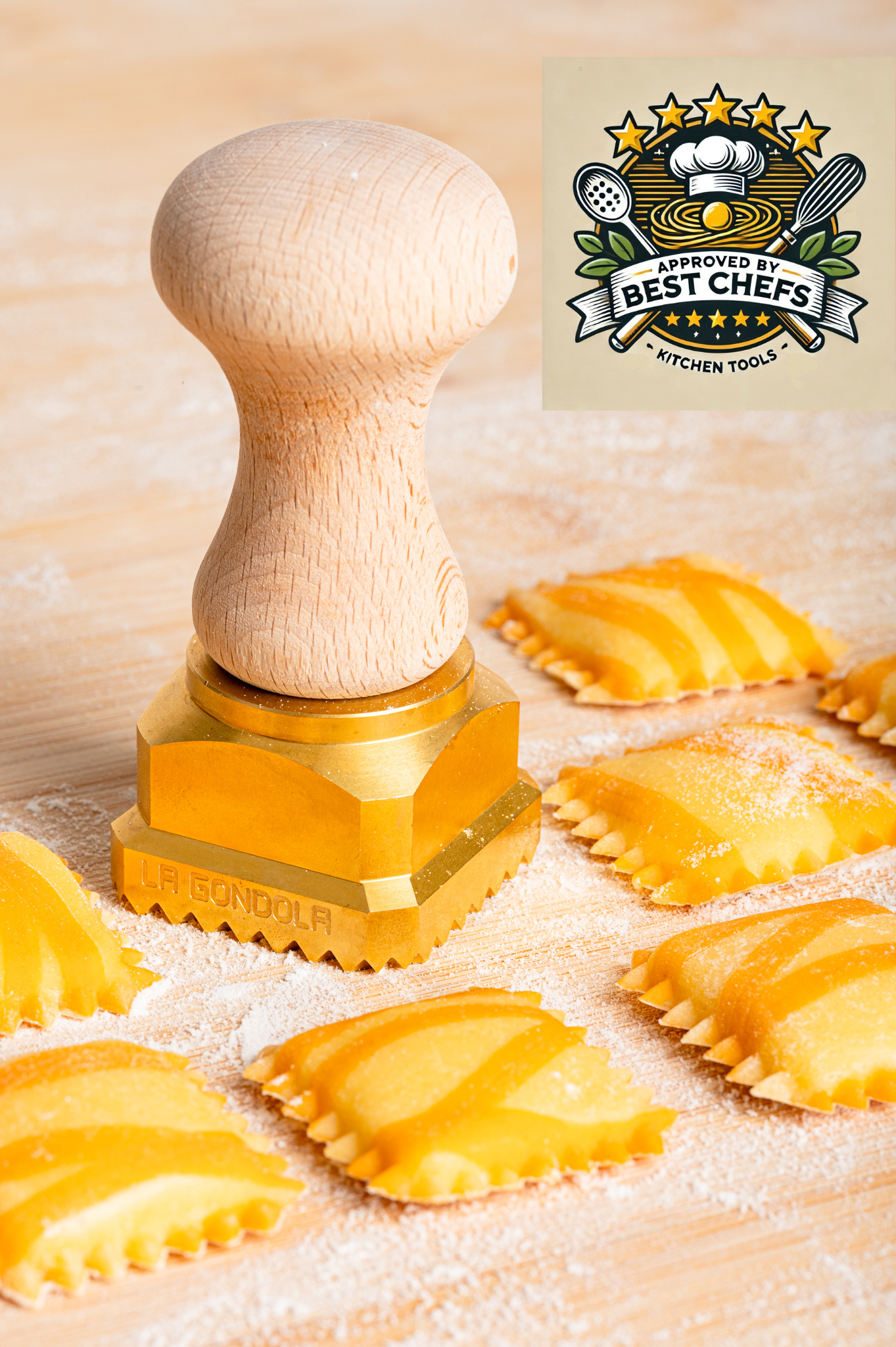


Corzetti are a traditional Ligurian fresh pasta, easily recognized by their round shape and the pattern pressed into the surface. The decoration is not purely visual. The shallow grooves created by the stamp also help the sauce settle across the pasta.
To achieve a clear design, the most important things are a fairly firm dough, an evenly rolled sheet and steady pressure with the stamp. There is no need to press excessively. The consistency of the dough matters much more.
What are corzetti?
Corzetti, also known as croxetti, belong to the pasta tradition of eastern Liguria. The best-known version consists of small round discs of fresh pasta decorated with an engraved stamp.
If the dough is not too soft and the pasta sheet is thick enough, the pattern remains visible after cooking. Once dressed, the grooves also help hold small amounts of sauce.
The name corzetti can also refer to another type of Ligurian pasta. In the Val Polcevera area, there is a smaller version shaped by hand into something resembling a tiny figure eight.
In this guide, we focus on the round stamped corzetti traditionally associated with the Ligurian Levante.
Where do Ligurian corzetti come from?
Stamped corzetti are particularly associated with eastern Liguria and the areas around Chiavari, Lavagna, Sestri Levante and Varese Ligure.
It is difficult to establish exactly when they first appeared, but they have been part of the local pasta tradition for centuries.
The stamps were carved with geometric patterns or designs chosen by families. The pasta was therefore not simply cut. Each disc received its own visible decoration.
The process is often compared to minting a coin, which helps explain why stamped corzetti are frequently described as small pasta coins, especially when several freshly made discs are laid side by side.
Some family traditions were also connected with this pasta. One documented custom involved giving a bride-to-be a tray of corzetti together with a carved wooden stamp from her new family.
Today, the croxetto of Varese Ligure is recognized as a Slow Food Presidium. This recognition applies to a specific local expression of the tradition rather than to every pasta sold under the name corzetti.
How to make corzetti dough
One traditional recipe for this pasta uses:
- 600 g of white flour
- 3 egg yolks
- Water
- A small pinch of salt
Eggless versions also exist. The recipe above is useful for understanding the consistency needed for stamped pasta: elastic enough to roll, but firm enough to preserve the pattern during cooking.
Place the flour on a work surface and make a wide well in the center. Add the egg yolks and salt, then begin incorporating the flour while adding water a little at a time.
Knead until the dough becomes smooth, firm and elastic. Cover it and allow it to rest for at least 30 minutes.
There is no single correct amount of water. Flour absorption, egg yolk size and room humidity can all affect how much is needed, so add it gradually.
If the dough still feels sticky after kneading, it may be too soft to produce a sharp pattern. If the edges crack while rolling, add a few drops of water and knead it briefly again.
Resting the dough is important because it makes rolling easier. Keep the portions you are not using covered so that the surface does not dry out.
How thin should corzetti dough be?
Roll the dough into a thin, even sheet, but do not make it translucent.
Corzetti need enough structure to preserve the stamped pattern during cooking. If the sheet is too thin, some of the detail may disappear.
Work with one portion of dough at a time and use flour sparingly. Too much flour can collect inside the engraved lines of the stamp and make the design less defined.
How to stamp corzetti
The process should be simple and repeatable.
Lay the pasta sheet flat on the work surface and place the stamp over the dough. Press straight down with firm, controlled pressure.
With a tool such as the LaGondola RITA corzetti stamp, the cutting edge forms the round disc while the engraved brass surface creates the pattern at the same time.
There is therefore no need to cut each disc first and decorate it in a separate step.
After pressing, lift the stamp vertically. The built-in expeller helps release the pasta without having to pull it away from the edge with your fingers.
The RITA corzetti stamp is made in Italy from brass and natural wood and produces corzetti approximately 5 cm across.
Before continuing with the entire sheet, check the first two or three pieces.
If part of the design looks less defined, make sure the pressure is even. If the pasta sticks to the tool, a very light dusting of flour may help, or the dough itself may need to be slightly firmer.
Arrange the finished corzetti in a single layer on a lightly floured board or cloth. Avoid stacking them while they are still soft because the pattern may flatten.
Which sauces are best for corzetti?
Corzetti work especially well with sauces that can settle into the stamped grooves without completely covering the decoration.
Pesto is one of the most natural pairings and connects this pasta with another classic Ligurian preparation.
Another option is a simple dressing made with butter, pine nuts, marjoram or sage and grated cheese. Its lighter texture allows the stamped pattern to remain visible.
Corzetti can also be served au tuccu, with the traditional Ligurian meat sauce.
If you are using pine nuts or other nuts, chop or crush them rather than leaving very large pieces.
The sauce should also avoid being excessively thick. A looser consistency spreads more easily across the pasta and allows the decoration to remain visible.
How to cook corzetti
Bring a large pot of salted water to the boil and add the corzetti, stirring gently.
Cooking time depends mainly on the thickness of the pasta and how long it has been left to dry. For this reason, tasting one is more reliable than following a fixed cooking time.
The pasta is ready when it is tender but still holds its shape.
Drain it carefully or lift the pieces from the water with a slotted spoon. Dress them in a wide bowl and avoid stirring too aggressively so that the stamped surface remains intact.
How to keep the stamped pattern clear
Before preparing a full batch, check a few simple details.
| Check | What you want | What to change |
|---|---|---|
| Dough | Smooth and dry to the touch | Add flour only if it is genuinely sticky |
| Pasta sheet | Thin, even and opaque | Re-roll sections that are too thick |
| Stamp | Clean and dry | Remove flour or dough from the engraved lines |
| Pressure | Vertical and even | Avoid tilting or rocking the stamp |
| Release | A clean disc without stretching | Use the expeller and lift vertically |
| Resting | Corzetti in a single layer | Do not stack them while soft |
A common mistake is trying to compensate for dough that is too soft by adding a large amount of flour during stamping. Flour can collect inside the engraved pattern and make it less defined.
Another common mistake is moving the stamp sideways while pressing. It is better to press once, vertically, and then lift the tool.
What to remember when making corzetti
A good result depends on a few basic details: the dough should be firm enough, the sheet should be even and the pressure should be vertical.
There is no need to create an extremely deep impression. The design should be clear without crushing the pasta.
Part of the appeal of corzetti comes from the repeated process itself: rolling the dough, pressing the design and seeing the decorated discs appear one after another.
If you want a tool that cuts and stamps the pasta in the same movement, discover the LaGondola RITA corzetti stamp in brass and natural wood.
FAQ about corzetti pasta
Are corzetti and croxetti the same pasta?
The two names are often used for the same Ligurian pasta tradition, particularly in the eastern part of the region.
However, there are two different shapes. Stamped corzetti from the Ligurian Levante are round discs decorated with an engraved pattern. Corzetti from Val Polcevera are smaller and shaped by hand into something resembling a tiny figure eight.
Can you make stamped corzetti without a stamp?
You can cut simple pasta rounds with a cutter, but they will not have the characteristic embossed surface of stamped corzetti.
To reproduce the traditional decorated coin-like appearance, an engraved stamp is required.
This does not mean that every type of corzetti requires a stamp. The Val Polcevera version is traditionally shaped by hand.
Why does the corzetti pattern disappear during cooking?
The problem usually begins before the pasta reaches the water.
The dough may be too soft, the pasta sheet may be too thin, there may be too much flour on the stamp or the pressure may not have been even.
Use a firm, rested dough, keep the engraved surface clean and press vertically. It also helps to leave the finished corzetti briefly in a single layer before cooking.
What is the best sauce for corzetti pasta?
Pesto is one of the traditional choices. Butter with pine nuts and aromatic herbs also works well, while tuccu offers a richer Ligurian alternative.
Rather than looking for a single “best” sauce, choose one that is not excessively thick and can settle into the stamped grooves without completely hiding the pattern.